
What Does Venue Rental Include for Weddings?
A wedding venue can look perfect in photos and still leave you surprised by the contract. Perhaps the ballroom is included, but setup time is not. Perhaps tables are available, but chairs, bar service, or cleanup carry separate fees. When couples ask, “what does venue rental include?” they are really asking a bigger question: What will we have the freedom, time, and support to create on our wedding day?
The answer varies widely from one venue to the next. A clear understanding of what is included helps you compare pricing accurately, protect your budget, and choose a setting that supports your vision rather than limiting it.
What Does Venue Rental Include? Start With the Space
At its most basic, venue rental gives you the right to use a designated event space for an agreed-upon date and timeframe. For a wedding, that may include a ballroom, ceremony area, cocktail hour space, outdoor grounds, dressing areas, or some combination of each.
The details matter. Ask whether your rental includes access to every space you plan to use, or whether the ceremony lawn, patio, bridal suite, and cocktail area are separate add-ons. If you picture guests moving from an outdoor ceremony to cocktails and then into a candlelit reception, confirm that each part of that experience is covered in writing.
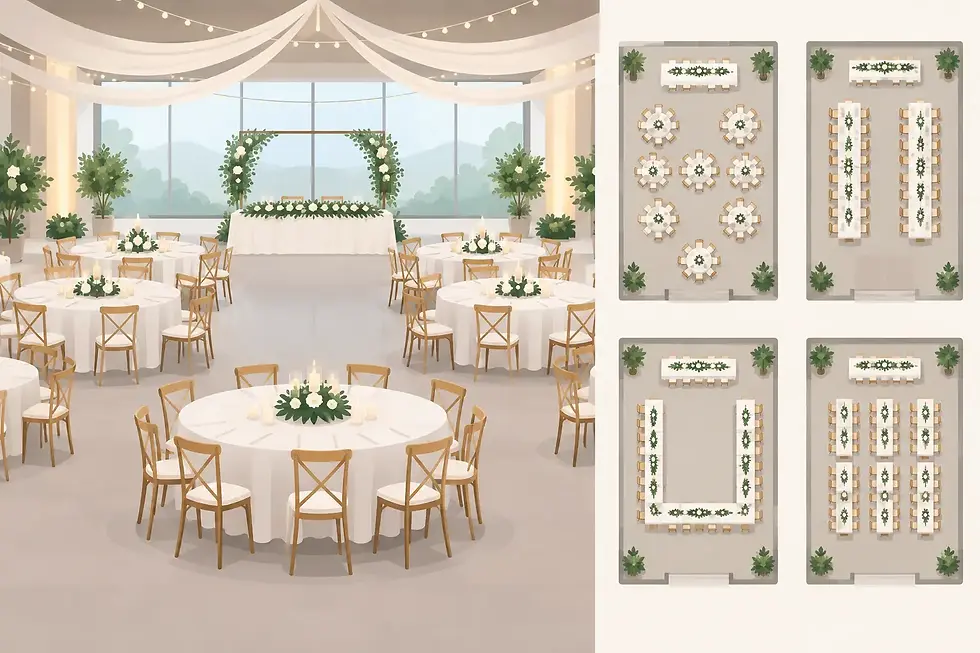
Capacity deserves the same close look. A room that accommodates 300 guests for a standing reception may not comfortably seat 300 guests for dinner, a dance floor, a band, buffet tables, and a bar. Ask for a layout based on your intended guest count and event format. The right venue should feel generous and inviting, not crowded once the celebration is underway.
A neutral, well-designed ballroom also gives you more creative range. It can support a black-tie reception, a garden-inspired celebration, vibrant cultural traditions, or a minimal modern design without forcing your color palette or décor choices to compete with the room.
Rental Hours Are Part of the Value
A lower rental price can be misleading if it only covers a short window. Wedding days need time for deliveries, floral installation, catering prep, photography, ceremony preparation, guest arrival, the reception itself, and final cleanup. When these moments are compressed, the day can feel rushed before it has even begun.
Review the total access period, not only the hours guests are invited. Some venues provide a few hours for the event and charge extra for early access, rehearsal time, or breakdown. Others offer an all-day rental that lets your vendors work on a more comfortable schedule.
At Magnolia Room, couples receive a 15-hour rental period. That extended access can make a meaningful difference for celebrations with detailed décor, larger guest counts, or a ceremony and reception held in the same location. It gives you room to decorate with intention, enjoy the day at your own pace, and complete cleanup without racing the clock.
Before signing, clarify when vendors may arrive, when your wedding party can enter, whether a rehearsal is available, and when all personal items must be removed. Also ask about overtime policies. Knowing the cost and availability of additional hours can prevent an unwelcome surprise at the end of the evening.
Furniture, Setup, and Essential Amenities
Many wedding rentals include practical event essentials, but there is no universal package. Tables and chairs are common inclusions, yet the style, quantity, and setup responsibility can differ. Confirm whether the venue supplies guest tables, cocktail tables, cake tables, gift tables, chairs, linens, and a ceremony arch or arbor.
Just as important, ask who sets everything up. A venue may provide 200 chairs but expect your planner, caterer, or rental company to arrange them. Another may place tables and chairs according to your floor plan. Neither approach is automatically better, but each affects your staffing needs and budget.
Amenities can shape the guest experience as much as the room itself. Look for features such as climate control, accessible entrances and restrooms, adequate parking, reliable power, catering prep areas, Wi-Fi if needed, and a sound system or appropriate connections for your DJ or band. Custom lighting can help transform the mood from an elegant dinner to a high-energy dance floor, while a dedicated photo or selfie station gives guests a fun place to capture the evening.
A statement bar is another feature worth discussing. If the venue includes a built-in bar, find out whether it is simply part of the setting or whether specific bartending, beverage, or service rules apply. A beautiful mahogany-and-marble bar can become a natural gathering place during cocktail hour, but the operational details still need to fit your plans.
Catering and Alcohol Policies Can Change Your Budget
Food and beverage policies are often the biggest difference between an all-inclusive venue and a flexible rental venue. An all-inclusive package may simplify planning by requiring you to use the venue’s in-house menu, bar program, and preferred vendors. For some couples, that convenience is valuable. For others, it can reduce menu choices, limit cultural or family recipes, and make it harder to control costs.
A venue with an open catering policy allows you to select a caterer whose style, service level, and pricing suit your celebration. You may choose a formal plated dinner, a chef-attended station, a barbecue buffet, a family-style meal, or dishes that reflect your heritage. The trade-off is that you will need to coordinate more vendors and confirm that your caterer has everything needed for service.
Alcohol policies deserve equally careful attention. Ask whether you may provide your own beer, wine, and spirits; whether licensed bartenders are required; whether security is needed; and whether there are corkage, cleanup, or bar staffing fees. Bringing your own alcohol can offer meaningful budget flexibility, but responsible service and clear planning remain essential.
If personal choice is a priority, look for a venue that welcomes outside caterers and allows couples to bring their own alcohol while maintaining sensible event requirements. This freedom lets you invest where it matters most to you, whether that is an exceptional dinner, a favorite local brewery, signature cocktails, or a dessert display your guests will remember.
Vendor Freedom and the Fine Print
Venue rental may include a list of recommended vendors, an exclusive vendor requirement, or an open vendor policy. Recommended lists can be helpful, especially when you are starting your search. Exclusive lists, however, mean you may be required to choose from a limited group for catering, floral design, planning, photography, entertainment, or rentals.
An open vendor policy gives you the ability to build the team that feels right for your day. You can hire a photographer whose work you love, a florist who understands your design, and a planner who matches your communication style. You can also work with trusted family connections or vendors who know your traditions.
With that flexibility comes a little more responsibility. Confirm vendor insurance requirements, delivery procedures, loading access, parking, and cleanup expectations. Ask whether your coordinator will be present throughout the event and what that role includes. A venue coordinator may manage the facility and timeline logistics, while a wedding planner handles your personal details, vendors, and design. Both can be valuable, but they are not the same service.
Costs That May Not Be Included
The rental fee is only one line in a wedding budget. Read the proposal closely for taxes, service charges, security deposits, damage waivers, cleaning fees, ceremony fees, rehearsal fees, setup charges, and required staffing. Ask whether there are additional costs for using outdoor space, extending the event, or bringing in specialty equipment.
It is also wise to ask about décor restrictions. Candles, hanging installations, confetti, sparklers, and open flames may require approval or may not be allowed. These policies protect the property and your guests, but knowing them early helps you make design choices with confidence.
Request a complete list of included items and potential add-ons before comparing venues. Then compare the total estimated cost for your actual wedding, not just the starting rental rate. A flexible venue may require you to source more services independently, yet it can also give you more meaningful control over where your money goes.
Questions to Ask Before You Book
Bring a short list of practical questions to every venue tour. Ask which indoor and outdoor spaces are included, how many hours you have access to the property, what furniture and amenities are provided, and who handles setup and cleanup. Confirm catering, alcohol, and vendor policies, then ask for every mandatory fee in writing.
Also pay attention to how the venue makes you feel. Can you picture your guests arriving comfortably, your wedding party preparing without stress, and your reception unfolding with room to celebrate? The best setting offers more than a beautiful backdrop. It gives you the confidence to bring your wedding vision to life, with enough flexibility to make every choice feel like your own.


Comments